Security for ServiceNow
Stop privilege sprawl before it reaches production
Admin access should never be the price of deployment. xtype enforces least privilege, separation of duties, and access controls natively across every ServiceNow instance so security is built into every change, not reviewed after the fact.





.svg)


.svg)
.svg)



Close the security gaps ServiceNow leaves open
ServiceNow was not built to enforce governance across environments. Every environment boundary creates a
privilege gap. xtype closes it.
The current way
 Broken authorization chainEvery environment boundary severs the record
of who changed what, when, and under whose authority. Every clone resets the evidence
chain. You cannot prove what you cannot see.- Admin access is the price of movement Moving change through ServiceNow requires privileged access at every boundary. Separation of duties exists on paper, not in the platform. The same person can write and deploy code to production.
- Audits are reconstruction projectsEvidence lives in documents, spreadsheets, emails, and platform logs that do not talk to each other. By the time you have assembled it, you are weeks behind on delivery.
With

 OBSERVE: One authoritative viewEvery change, access decision, configuration, and dataset visible across every instance, in real time.
- CONTROL: Policy enforced at runtimeLeast privilege and separation of duties are enforced automatically, as well as procedurally. Developers deploy without admin access. AI agents operate within those same boundaries. Governance stops being a process of trust and becomes a pervasive enforcement of policy.
- PROVE: Compliance is always onImmutable audit trails aligned to SOX, HIPAA, FDA, DORA, and NIS 2. Continuous monitoring replaces point-in-time scrambles. Audits become a query, not a project.
Switch to security that’s enforced at runtime, not documented after the fact
Observe
Full visibility into who has access to what, across every instance
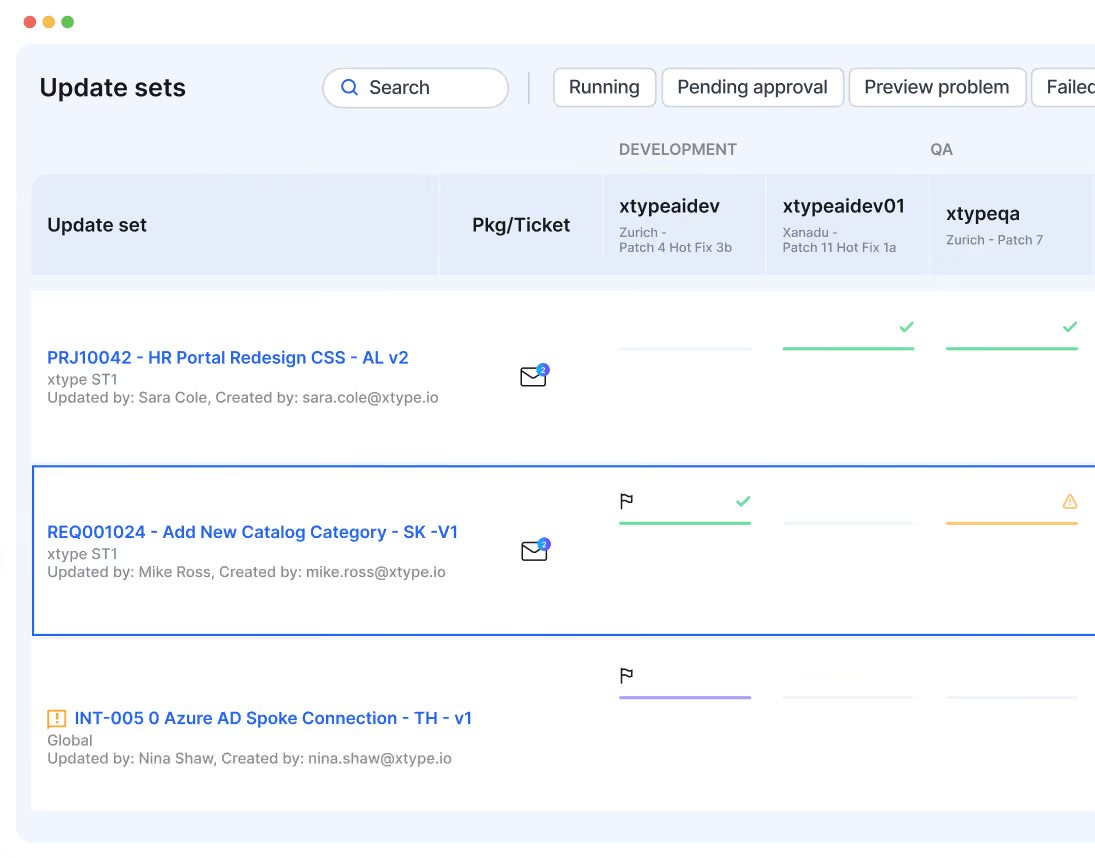
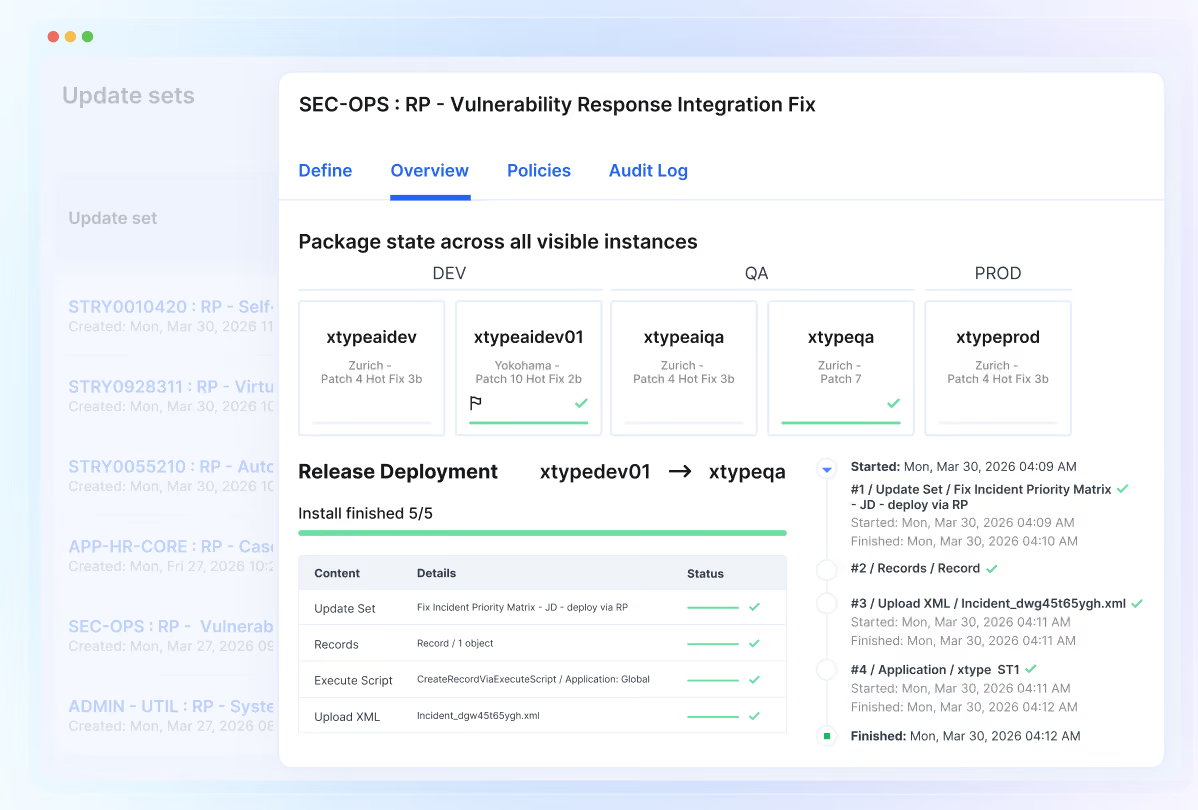
xtype gives you a unified, time-based view of every role, change, and permission across your entire ServiceNow estate. Know exactly who has access to what, on which instance, and under whose authority. Define a data set (e.g., your roles, ACLs, and AI configurations), and xtype audits it across instances down to the individual field, so an unauthorized change or a drifted permission shows up as a finding, not a surprise. Nothing is invisible.
Control
Runtime access enforcement and deployment guardrails
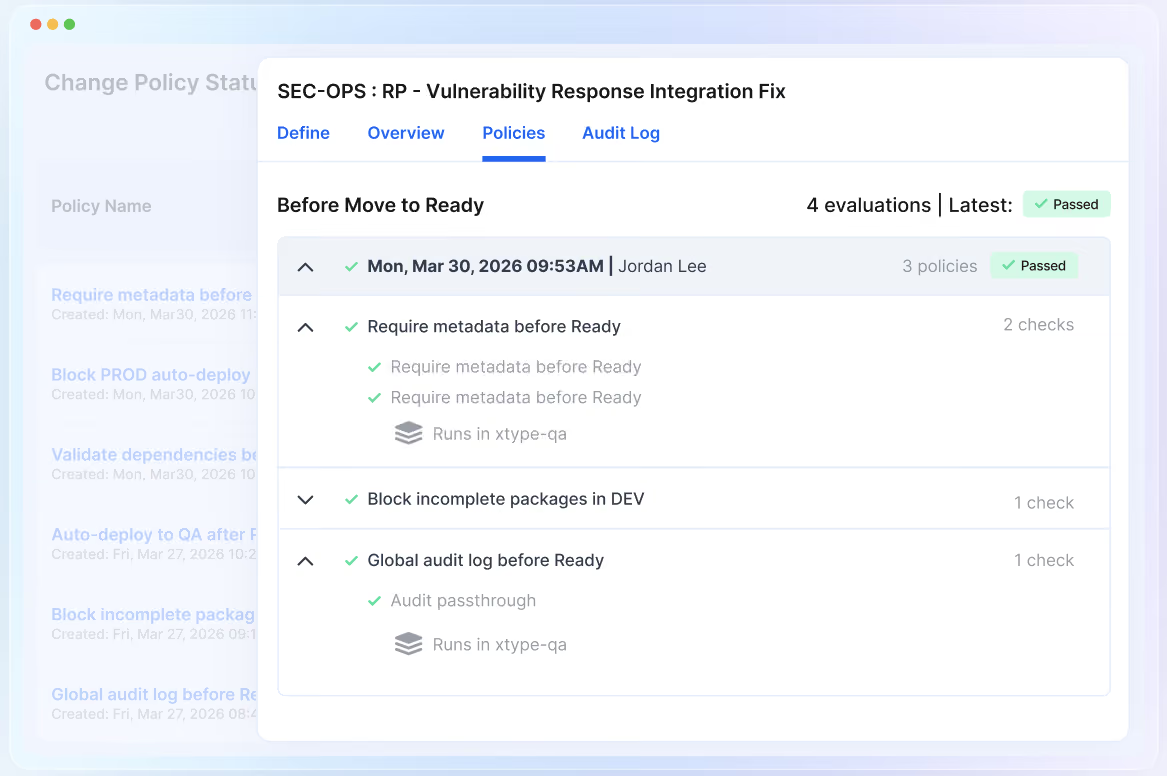
Policy is not a document. xtype enforces access controls, separation of duties, and least privilege automatically across every environment. Deployment policies gate every change before it reaches production, blocking violations before they become incidents.
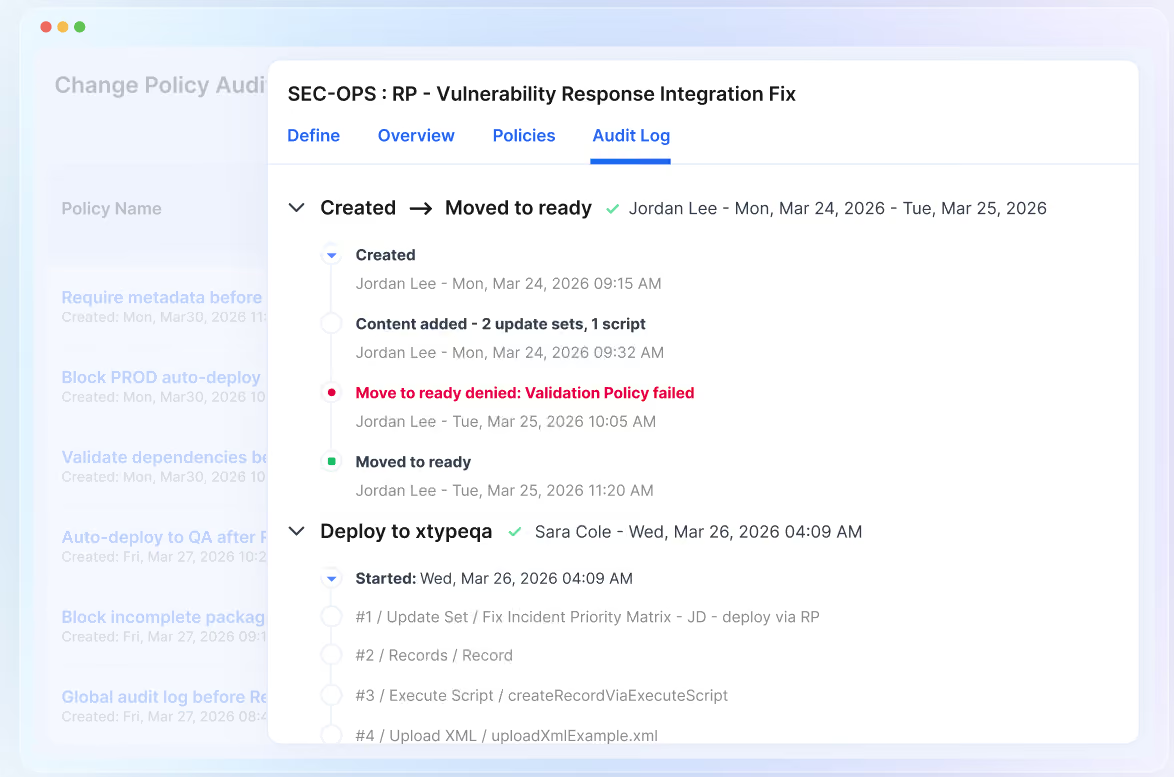
PROVE
Tamper-proof evidence of every access decision and change
Every deployment, approval, rejection, and policy execution is permanently recorded in an immutable audit trail that survives clones and upgrades. When a security review or audit asks for evidence, the evidence is already there.
See what 100% change success rate, zero CAPAs, and 13-minute deployments actually look like
Explore the case studies from regulated enterprises that built governance into ServiceNow rather than around it.


-min%201.png)





Eliminate privilege sprawl and enforce separation of duties across your ServiceNow estate
See how xtype enforces access controls, eliminates privilege sprawl, and creates a tamper-proof record of every change across your ServiceNow estate.
- Explore the platform and see it in action.
- See how xtype integrates with your ServiceNow environment.
- No commitment - just a chance to get your questions answered.
Frequently asked questions
How does xtype enforce least privilege across ServiceNow environments?
xtype replaces the need for admin access at environment boundaries with policy-enforced deployment pipelines. Developers deploy through xtype using stage-specific permissions scoped to their role. Elevated credentials are never required, and access is technically enforced rather than procedurally assumed.
Can xtype enforce separation of duties natively in ServiceNow?
Yes. xtype enforces SoD at the platform level through granular RBAC with stage-specific permissions. The same user cannot write, approve, and deploy a change to production. This is enforced technically by xtype, not documented in a policy that relies on people following the right process.
What happens to access records during a ServiceNow clone operation?
xtype maintains immutable audit trails that survive clone operations and upgrades. The full authorization chain, including who had access to what and when, is preserved outside the cloned instance, so clone events do not reset or break your security record.
Does xtype extract or store ServiceNow data outside the platform?
No. xtype is built natively inside every ServiceNow environment. It operates entirely within the platform's own security model. No data is extracted, copied, or exposed externally. This is what makes xtype ServiceNow Store certified and trusted by auditors.