
ServiceNow Data Governance, Management, and Ownership

Effective data governance on the ServiceNow platform is essential for enterprises seeking control, visibility, and scalability across their ServiceNow environments. As your platform grows, structured governance ensures you manage change safely, reduce risk, and maintain a secure, well-controlled ecosystem that supports business growth without sacrificing stability.
This guide explores ServiceNow data governance, addressing key challenges and governance structures that empower platform owners and governance teams to safeguard their ServiceNow investment.
What is ServiceNow Data Governance and Why Does it Matter?
ServiceNow data governance establishes the standards and policies governing how data is owned, managed, secured, and structured within your Now Platform instance. It is a critical element of your overall technical governance ServiceNow framework, designed to maintain high-quality data that drives automation, analytics, and workflow efficiency.
Good governance is vital because it ensures:
- Data accuracy and completeness for effective decision-making and automation.
- Secure access controls to protect sensitive information and comply with regulations.
- Traceability through audit logs to monitor data changes and support compliance audits.
- Alignment of data governance policies with enterprise-wide data management initiatives.
Without governance, data inconsistencies, unauthorised modifications, or compliance failures can undermine the value of your platform and expose your organisation to operational and legal risks.
What Types of Data Need Governance on ServiceNow?
Your governance program should cover all data types created, stored, or processed on the ServiceNow Platform. These typically include:
- Reporting Data: Performance metrics and KPIs used for tracking service delivery.
- Transactional Data: Records from workflow transactions such as incidents and cases.
- Product Setup Data: Configuration data controlling application behaviours.
- Common Service Data: Data shared across products supporting service models and CMDB.
- Foundation Platform Data: Organisational structure data like users, groups, locations.
- Platform Configuration Data: Security-related settings and domain configurations.
- Platform Maintenance Data: Logs and audit trails relating to platform health.
- Integration Data: Data exchanged between ServiceNow and external systems.
Governance policies should apply broadly while tailored to the needs and ownership responsibilities of each data type.
For example, security admins primarily govern configuration data, while service owners manage transactional records.
Keys to Effective ServiceNow Data Governance
To build a robust ServiceNow data governance framework, you have to address these five key factors:
Data Ownership and Stewardship
Clear roles must be assigned to data owners who are accountable for the accuracy and integrity of specific data sets. Data stewards operate day-to-day, enforcing policies and maintaining data quality.
Data Quality Management
Strong data quality management ensures the information stored in ServiceNow is accurate, complete, and reliable. Governance processes should regularly assess data health and validate that records meet defined standards for structure and completeness.
Validation rules help prevent entry errors at the source, while dashboards provide visibility into key data quality metrics. Clear processes for duplicate resolution, data retirement, and dataset certification ensure records remain trustworthy over time.
Data Architecture and Integration
Governance standards enable consistent data modelling aligned with the Common Service Data Model (CSDM) and CMDB structure. Integration governance ensures that inbound data from external systems is standardised, authenticated, and reconciled to preserve the single source of truth.
Data Security and Compliance
ServiceNow data governance defines how sensitive information is protected and accessed across the platform. Role-based access controls help enforce the principle of least privilege, ensuring users only access the data required for their role.
Encryption protects data both at rest and in transit, while audit logs provide visibility into how information is accessed and used. Governance policies also ensure data handling aligns with regulatory and data sovereignty requirements such as GDPR or HIPAA.
Lifecycle and Policy Enforcement
Data governance policies must encompass lifecycle management practices like retention, archiving, and deletion, while enforcing compliance requirements through automated business rules and workflow approvals.
Who Should Own ServiceNow Data Governance?
ServiceNow data governance is usually led by the platform owner, working closely with a technical governance board that provides strategic oversight. The platform owner holds overall accountability for governance policies and ensures they align with wider enterprise data strategies and platform objectives.
Technical leadership is typically shared with a platform architect or data architect, who defines the technical standards that guide how data is structured, managed, and controlled within the platform. Operational accuracy is often supported by roles such as the CMDB manager, who focuses on maintaining the integrity of configuration data, alongside data managers and data stewards who monitor day to day data quality and enforce governance policies.
Security administrators also play an important role by advising on access controls and data protection practices, ensuring sensitive information is handled correctly across the platform. At the same time, compliance officers and audit specialists provide independent oversight to confirm that governance policies meet regulatory and internal compliance requirements.
Business process stakeholders should be involved to represent the teams that create, manage, and rely on ServiceNow data. Their input helps ensure governance policies remain practical, aligned with real operational needs, and consistently followed across the organisation.
Involving these stakeholders ensures governance policies are practical, aligned with business goals, and effectively implemented.
How to Get Started with a Minimum Viable Data Governance Approach
ServiceNow data governance is best deployed incrementally. The following approach balances timeliness with thoroughness, making governance manageable and sustainable.
- Collaborate with your platform owner and governance board to identify the highest priority areas (often data ownership and data security).
- Define a minimal set of policies addressing these urgent needs to quickly build value and gain support.
- Develop clear standards and enforcement mechanisms for the selected areas.
- Expand gradually to other governance components like data quality, lifecycle management, and architecture as your governance maturity grows.
- Continuously refine and adapt policies based on feedback and evolving organisational requirements.
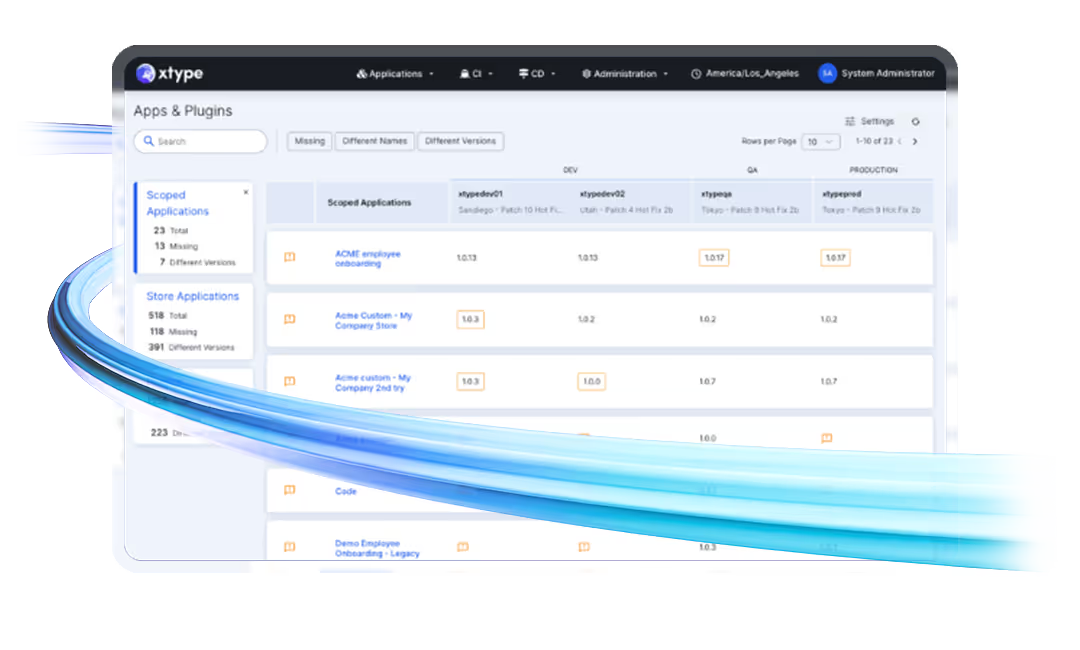
How to Embed Data Governance into Your ServiceNow Environment
Why Strong Data Governance Makes ServiceNow a Strategic Asset
A well-governed ServiceNow platform gives you confidence that your data is:
- Accurate and trustworthy for operational automation and decision-making.
- Secure and compliant with regulatory requirements.
- Structured and integrated for scalable growth across business units and geographies.
- Auditable and transparent for effective risk management.
By embedding strong data governance, you turn your ServiceNow platform from a tactical tool into a strategic enabler of business agility and innovation.
Ready to explore how structured data governance can safeguard and accelerate your ServiceNow environment? Our team is here to help you establish practical policies and governance structures tailored to your organisation's needs. Reach out to our ServiceNow governance platform today to start transforming your ServiceNow platform with confidence.


Related Articles


.jpg)